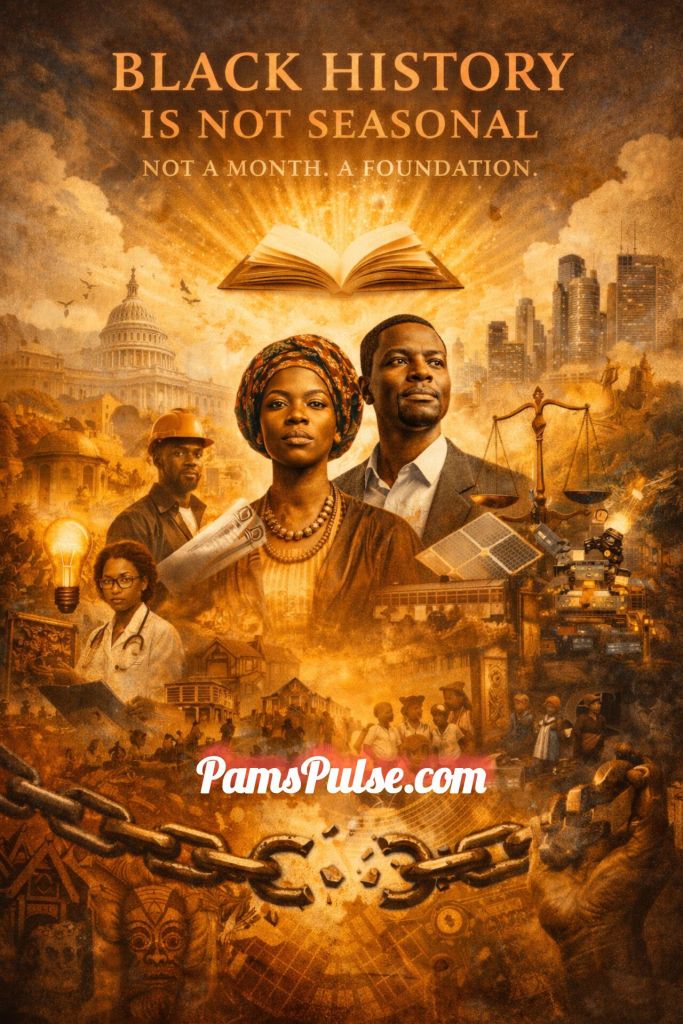
Black history is American history. It should be told and taught all year long, not separated out as if it is something extra or optional. It should not live in a special month or a special category. It should simply be part of history, because it helped build this nation.
Black History Month has always felt less like celebration and more like containment to me.
It feels like a neat little box where our story can be handled once a year and ignored the rest of the time. Slavery, struggle, speeches. But not much about labor. Not much about innovation. Not much about theft.
You can see it happening in real time. Every February 1st, streaming platforms suddenly unlock what I call their Black vault. Netflix, Hulu, and others roll out rows of Black movies and Black shows and place them into a special category called Black Stories or Black Voices. For twenty eight days, our stories are visible. Then March comes, and the vault closes again.
But here is the real question. Why does it have to be its own category at all. Why are Black stories treated like a specialty aisle instead of part of the main store. Why can’t Black films simply live under drama, comedy, romance, and documentaries like everything else. Why must they be labeled first by race instead of by story.
That is not celebration. That is separation with better lighting.
Before slavery, we were building. For nearly two hundred and fifty years in the United States, we were building for nothing. After slavery, we were still building for pennies while other people built wealth.
We built farms, railroads, ports, roads, cities, and entire industries we were not allowed to own. This country did not rise by accident. It rose on unpaid and underpaid Black hands.
And while we were building, we were also inventing.
But our patents were blocked. Our designs were taken. Our ideas were filed under other people’s names. Our brilliance became someone else’s legacy.
So what we really inherited was not just chains. We inherited erased credit.
Our story did not begin in bondage. It did not pause after civil rights. And it does not fit inside February.
History should not be rationed. Truth should not be scheduled.
We helped build this country before slavery, during slavery, and after slavery. We built it with our bodies, and we built it with our minds.
And God saw all of it.
When human records were erased, altered, or stolen, heaven kept the account.
The Western canon tells us this clearly:
Malachi 3:16 (NIV)
“Then those who feared the Lord talked with each other, and the Lord listened and heard. A scroll of remembrance was written in his presence concerning those who feared the Lord and honored his name.”
God keeps records when humans erase them. Heaven does not lose receipts.
The Ethiopian canon deepens this same truth. In the Book of Enoch, we are taught that the cries of the oppressed rise up and are written in heavenly books, even when earthly records are altered or destroyed. When history edits, heaven archives.
That means stolen credit may live on paper, but truth lives with God.
But I want to be clear about something. Just because these atrocities happened does not mean we are meant to live in a woe is me mindset.
Our ancestors did not survive all of that just so we could sit in it. They rose above it. They fought through it. They kept building, learning, inventing, and pushing forward anyway.
So yes, we tell the truth about what was done. We educate. We expose. But not because we are stuck in pain. We do it because we are proud of where we came from and what we overcame.
This is not about wallowing.
This is about remembering rightly.
Tomorrow in Pam’s Pulse – Day Two, we are going to talk about something just as important.
When did we stop believing in our accomplishments and in all the things we were capable of doing.
How did communities that are predominantly Black American fall into the state of disarray they are in.
When did we allow mental chains to replace physical ones.
That conversation is coming.
 Pam's Pulse