
Strong People Burn Out When They Fight Outside Their Assignment

Being Strong Isn’t the Same as Being Called to Everything

There’s a kind of tired that sleep doesn’t fix.

Not physical tired.
Not even emotional tired.

It’s the exhaustion that comes from constantly engaging.
Constantly responding.
Constantly explaining.
Constantly standing in fights that don’t actually move your life forward.

Lately, I’ve been sitting with a quiet realization.
I’m not tired because I lack strength.
I’m tired because I’ve been spending strength where it was never assigned.

And that hits different.

Because strong people are expected to handle everything.
We become the voice of reason.
The truth-teller.
The fixer.
The educator.
The one who can “take it.”

So we jump into arguments.
We correct misinformation.
We absorb people’s projections.
We carry conversations that were never meant to be ours.

And slowly, our spirit starts to dim.

What makes it heavier is this question I keep turning over in my heart:

If I stop engaging, will people think I’m weak
Or scared
Or avoiding truth
Or backing down

But here’s the truth I’m learning.

Silence is not surrender.
Boundaries are not fear.
And disengaging from chaos is not the same as abandoning purpose.

When I look at Scripture, I don’t see God applauding constant engagement.
I see Him honoring focus.

Nehemiah understood this long before we had comment sections and social media timelines.
He had one assignment. Build the wall.

And while he was doing exactly what God called him to do, the noise showed up.
Mockery. Distraction. False urgency. Invitations to argue. Invitations to explain. Invitations to come down and address people who had no intention of helping him build anything.

Nehemiah didn’t insult them.
He didn’t defend himself.
He didn’t debate motives.

He simply said he couldn’t come down because he was doing a great work.

That one sentence carries so much wisdom for today.

Because the moment you step into what God has called you to do, the distractions come dressed as responsibility.
As righteousness.
As “speaking up.”
As “educating.”
As “standing your ground.”

But not every fight is a calling.

The Ethiopian texts echo this same truth quietly but powerfully.
Baruch, who walked closely with Jeremiah, wasn’t assigned to fix the people’s rebellion or convince everyone to change. His responsibility was to preserve the word. To protect what God placed in his hands.

When Baruch carried that responsibility alone, he grew weary.
Not because the assignment was wrong, but because the weight around it was heavy.

And that feels familiar.

We are living in a time where outrage is rewarded.
Reaction is expected.
And disengagement is misunderstood.

People want your energy on demand.
They want you to explain history, politics, race, faith, and morality in a comment box.
They want access to your emotional labor without offering respect, curiosity, or growth in return.

And strong people keep showing up.

Until they burn out.

I’ve started to recognize when I’m outside my assignment.

It shows up as constant irritation.
A heaviness before I even open an app.
The feeling that I’m responding more than creating.
That I’m explaining more than building.
That I’m defending instead of resting.

That’s not weakness.
That’s misalignment.

Purpose energizes.
Distraction drains.

Here’s the part that’s uncomfortable but freeing at the same time.

Some people are not meant to understand you in this season.
Some conversations are not meant to be resolved.
Some arguments are not meant to be won.
And some battles exist solely to pull you away from what you’re actually called to do.

Strong people burn out when they fight outside their assignment.

Not because they aren’t strong enough.
But because strength was never meant to be used everywhere.

I’m learning that my peace is not optional.
My focus is not negotiable.
And my assignment deserves protection.

I don’t owe everyone my voice.
I don’t need to attend every argument I’m invited to.
And I don’t have to prove truth to people who are committed to misunderstanding it.

This isn’t avoidance.
It’s wisdom.

This isn’t silence.
It’s discernment.

This isn’t stepping back from truth.
It’s stepping deeper into purpose.

When I stay in my lane, my strength returns.
When I stop fighting unnecessary battles, my clarity sharpens.
And when I honor my assignment, exhaustion no longer has the final word.

Strong people don’t burn out because they’re weak.
They burn out because they’ve been carrying what was never theirs.

And I’m choosing, intentionally, to stay where I’m assigned.
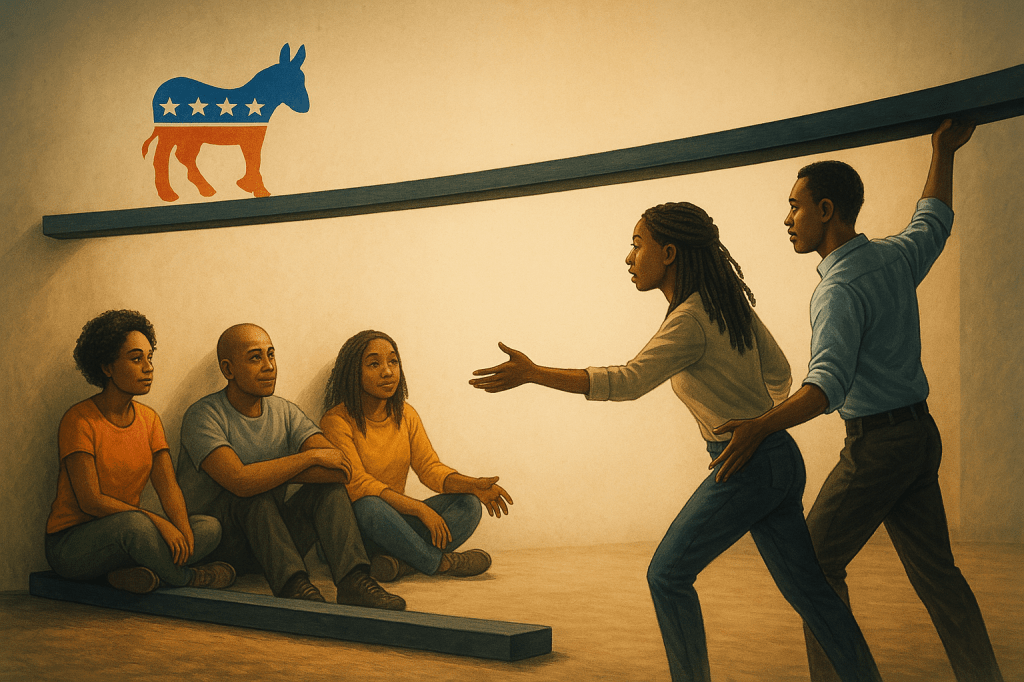
Raise The Bar

Let me start with something we forget far too easily.

Just because somebody in authority sets the bar low and their own fear keeps them from raising it does not mean we have to stay chained to their limit. Their ceiling is not your ceiling. Their fear is not your boundary.

We have to stop waiting for people with small vision to define how high we are allowed to climb. If they set the bar low that is their business. Raise yours. And then jump over it.

While I was thinking about that I stumbled across the story of Stephen Bishop. A man I never learned about in school. His story hit me like truth wrapped in fire. Because what he did is the exact picture of what it looks like to refuse someone else’s ceiling.

The Boy The World Tried To Limit

Stephen Bishop was seventeen. Enslaved. Assigned forced labor inside Kentucky’s Mammoth Cave. His life was not built on opportunity. It was built on commands.

Lead the tourists.
Stay on the familiar paths.
Do not explore.
Do not ask questions.
Do not dream.
Do not become anything more than the box you were placed in.

That was the limit placed on him.

But Stephen Bishop was not built for limits. He was not built for repetition. He was not built for the tiny world he was forced into.

Something in him felt pulled to the darkness of that cave. To the mystery. To the places no one dared to go. And not because it was a job. But because something inside him refused to settle for the boundaries someone else drew around him.

The Part That Shook Me

Stephen did not explore during the day with permission. He explored on his own time. What little time an enslaved teenager even had.

After a full day of labor. After walking tourists through the parts they considered safe. After the master went to sleep.

While everyone else rested, Stephen walked into a pitch black cave at night carrying only an oil lamp and a courage the world still talks about.

Then he reached what everyone else feared. The Bottomless Pit. The end of all known maps. The line where grown men turned back.

But Stephen did not turn back.

He stripped a cedar sapling. Laid it across the chasm. And crossed it.

A teenager balancing above a drop that could have taken his life instantly. And because he crossed it he discovered an entire world scientists did not even know existed.

He doubled the known size of Mammoth Cave.
He named chambers after literature he taught himself to read.
He mapped the system from memory. Maps that modern explorers still rely on.

He was legally property.
But spiritually. Mentally. Intellectually.
Uncontainable.

Would A Stephen Bishop Today Stop At The Line

And it made me ask myself.

If a person with a Stephen Bishop spirit lived today and someone tried to limit them or draw lines around them or hand them ceilings…

Would they stop?

Or would they walk past it the same way he crossed that cedar pole in 1838. With purpose. With boldness. With a quiet “watch me” in their spirit.

Because that kind of spirit does not disappear. It shows up in every generation. And it never bows to fear.

Be The Bar Raiser

Stephen Bishop did not wait for permission. He did not bow to ceilings. He did not follow limits set by people who feared what he might discover.

He stepped into darkness and came back carrying light.

So yes. Honor Stephen Bishop. Say his name. Tell his story. But also take the message with you.

You are not required to live under anyone else’s bar.
Raise your own.
Jump it.
Set the standard for yourself.

Be the bar raiser.
Be the one who refuses to shrink.
Be the one who crosses boundaries fear tried to draw.
Be the one who discovers what others never dared to see.

Because God puts a Stephen Bishop spirit in people He calls to do more.

And maybe today that someone is you.

The Biblical Connection

Stephen Bishop’s courage is the same spirit I see in Scripture.

Western Bible: Joshua chapters fourteen and fifteen. Caleb did not stop when fear spoke. He asked for the mountain everyone else avoided. He did not bow to small thinking. He raised the bar.

Ethiopian Canon: The Book of Jubilees. Chapters ten through fifteen. God calls His people higher. He reminds them of who they are. He pushes them beyond fear and into destiny.

God did not create you for small living. He did not design you for ceilings placed by someone else. He calls you higher. He calls you forward. He calls you to territory that fear tries to block.

Stephen Bishop crossed a line that everyone else refused to cross. Caleb climbed a mountain everyone else feared. Jubilees reminds us that God keeps calling His people into more.

Their limits are not your truth.
Their fear is not your future.
Their ceiling is not your story.

Raise the bar.
And climb.